Our love-hate relationship with social media
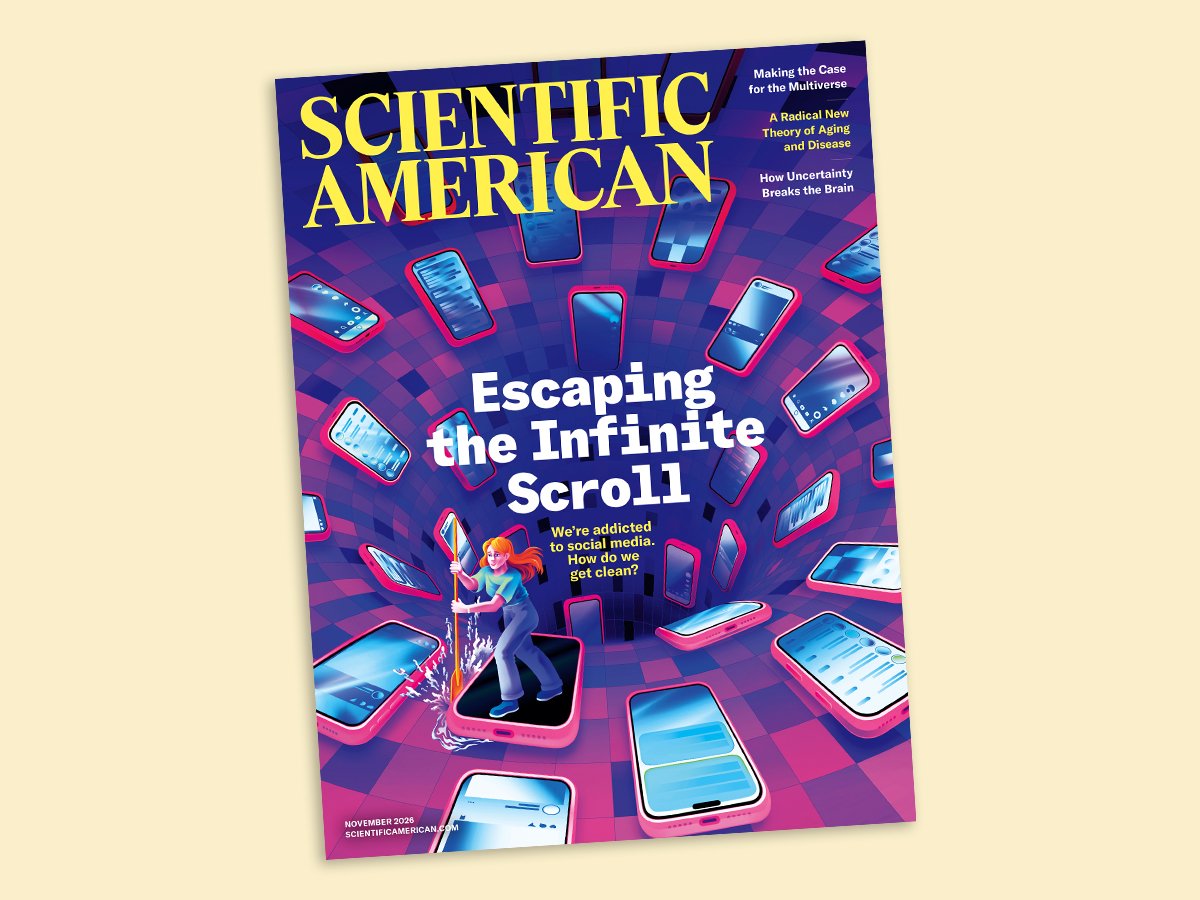
Two opposing ideas can be true at once. Something can be helpful and harmful, good and bad, annoying and endearing. That’s the premise of dialectical behavioral therapy (DBT), and it’s also, I think, partly why we are having such a tough time navigating social media. We genuinely benefit from the “infinite scroll of doom.” We are social beings, and our very survival has always depended on connections. A lone human ancestor would have been easy pickings for a hyena on the African savanna, and without cooperative hunting or food gathering, our forebears simply wouldn’t have made it. Even today human infants are helpless without at least one connection. We’re built for bonding, so much so that the brain rewards us for it, releasing bonding chemicals such as oxytocin when we connect. Maybe, then, it’s no wonder we are drawn to social media platforms, where connections can be forged in minutes.
Here’s where things get complicated. As associate editor Allison Parshall points out in our cover story, social media isn’t quite the same as real-world meetups or handwritten letters (I’m now reading Virginia Evans’s 2025 debut novel, The Correspondent, whose theme touches on the lost art of letter writing). Platforms such as X, Facebook and Instagram run on algorithms that hack the brain’s mesolimbic pathway, whose neurons rely on dopamine, a type of “feel-good” chemical that can drive motivation and reward. “I’ve come to almost understand algorithms as being heat-seeking missiles that identify psychological vulnerability,” one psychologist told Allison.
That quote really hit home. After talking with Allison in the initial stages of her reporting, I realized I’m apparently vulnerable to sad medical stories, and my Instagram algorithm picked that up right away. How could I not read a post describing a recent disease diagnosis or the loss of a child that my feed was serving up?
On top of these heat-seeking missiles, the platforms play to humans’ (particularly teens’) need to be accepted and admired by peers. Witness the kid constantly checking a new social post to see how many “likes” it’s received; many of us adults do the same thing. To me, the draw feels automatic and irresistible.
But how irresistible? The first step in 12-step addiction-treatment programs involves admitting you are powerless to resist your vices, including the urge to dive headfirst into social media so deeply you can no longer manage other parts of your life. For Meg, who is part of an Internet-addiction program and who spoke to Allison for this feature, her social media habit kept her up all night and left her unable to attend to her kids in the morning. “I would wake up at 10 A.M. just feeling such shame, but I couldn’t stop it,” Meg said. “I did it over and over.”
You don’t have to cross that threshold for social media to take a toll on your mental well-being. Like with many things we love that are also bad for us, some people find a balance, one where they get more of the good—reconnecting with old friends, a creative outlet—than the bad.
People whose lives spiral when social media enters the picture might need to abstain, although doctors are finding that for behavioral addictions abstinence might not be feasible (screens are everywhere). Instead they are shifting to harm reduction. This kind of recovery can involve DBT, a therapy that focuses on mindfulness and emotional regulation. Gradual progress is the key because a healthy relationship with technology won’t develop overnight.
When I’m not lying awake worrying about what screen time is doing to my own kids’ social and cognitive development, I’ll admit this whole detour into human nature is kind of fascinating. I think you will find our feature on the subject fascinating as well.