A graphic explainer of uranium enrichment
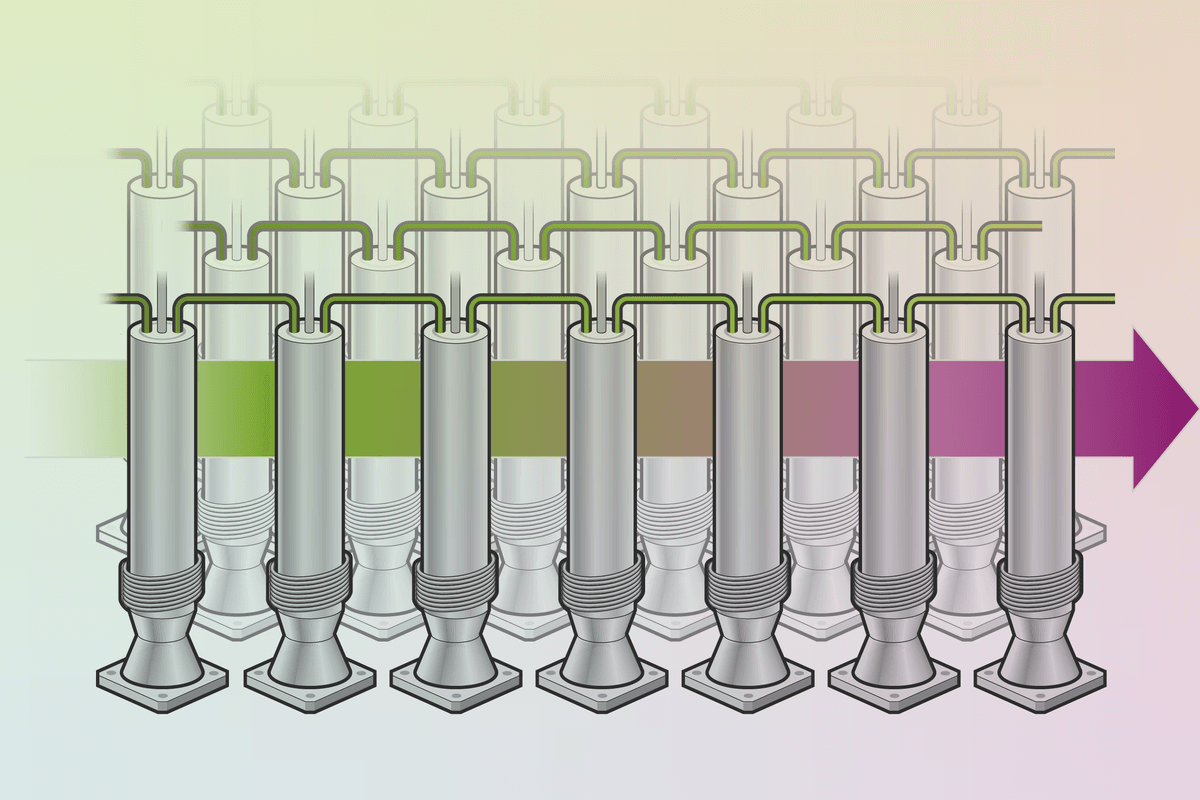
Uranium enrichment is a contentious topic these days. This process of purifying uranium to increase the concentration of the isotope uranium-235 is important for nuclear power plants, but it is also crucial for building nuclear weapons.
The ongoing war in Iran has centered on nuclear issues, including enrichment—Iranian officials have resisted any peace-deal terms that restrict the country’s enrichment program. And a proposed agreement between the U.S. and Saudi Arabia would break with precedent by allowing enrichment in that country for the first time—worrying nuclear nonproliferation advocates.
Both nuclear power and nuclear bombs require a lighter, rarer kind of uranium, U-235, rather than the more common, heavier U-238. (The difference is in the number of neutrons per atom—the usual variety has three more.) Both isotopes are found in nature, but the smaller one is less stable and more likely to break apart when hit by an errant neutron. This quality makes it “fissile,” meaning it can easily split and prompt a chain reaction: one uranium atom breaks apart, releasing energy and neutrons, which hit other atoms and break them apart, and so on.
Power plants moderate this reaction, so they require only 3 to 4 percent U-235. Weapons, on the other hand, need a much higher concentration—90 percent—to spark an uncontrolled reaction.
But how, exactly, does enrichment work, and why is it dangerous?