Science/Tech

Science/Tech Sunday August 23, 2026 Aug 23, 2026 46 articles

Science

ScienceDaily: Space & Time

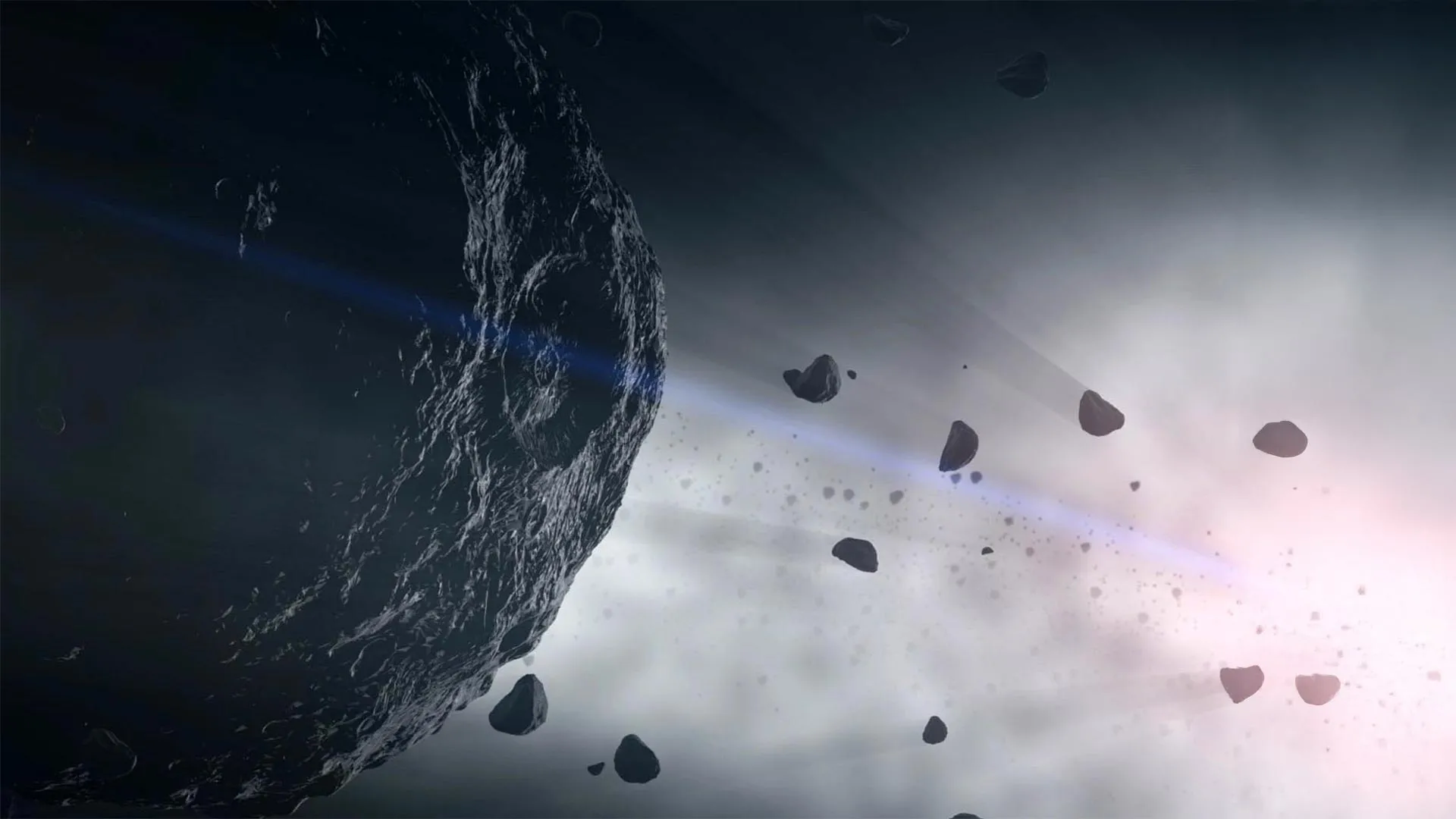
Black holes keep tearing these stars apart, but they survive

Most galaxies are thought to harbor a supermassive black hole at their center. These enormous objects can weigh millions or even billions of times more than the sun, creating some of the strongest gravitational environments known in the universe.

When a star passes dangerously close to one of these black holes, destruction is not always immediate. Some stars survive the encounter and return for additional close passes, generating a fresh burst of light each time.

Continue reading →

Science News

Mysteries of the commonplace

Static electricity is all around us. Who among us has not experienced a painful zap when touching a doorknob after crossing a carpeted room? And what child has not experienced the thrill, or mortification, of looking like a porcupine after having their head rubbed with a balloon?

Continue →

Space.com

How will NASA's astronaut training hub change with commercial space stations?

HOUSTON — What does NASA's astronaut training hub look like these days, as the agency aims to bring more commercial space stations into the fold?

It's an interesting mix of government and private companies, of space agency personnel and of contractors, all working together to keep U.S. and international astronauts flying through the end of the ISS — currently expected around 2030 — and the new breed of commercial space stations expected to take its place.

Continue →

Scientific American

Why trauma changes how our memory engages with our conscious experience

When survivors of trauma recount their experiences, they are often questioned because of how they relay their stories. They may have problems remembering what happened, or their memories may be jumbled or even contradictory. People hearing those stories—attorneys, reporters, healthcare workers or friends—may expect a clearer, linear narrative.

Continue →

Space.com

'We Want to Believe' book explores the reality of UFOs: 'It's always going to be more likely that someone is wrong about what they saw' (interview)

After all these years, we still want to believe.

Whether you're a bona fide believer or a staunch skeptic, we can all agree that UFO legends and lore is a fascinating subject that continues to fuel endless debate. And with pop culture feeding our lizard brains lurid tales of flying saucers and alien invasions, it’s no wonder humanity is always up for a good story of inexplicable aerial sightings or various uncanny encounters of the third kind.

Continue →

ScienceDaily: Space & Time

JWST finds early galaxies may be 4 times more massive than thought

Astronomers have found that some of the largest galaxies in the early universe contained many more small stars than scientists previously realized. That hidden population means these ancient galaxies may have been significantly more massive than earlier estimates indicated.

Continue →

Scientific American

September 2026: Science history from 50, 100 and 150 years ago

Swords into Fuel Rods

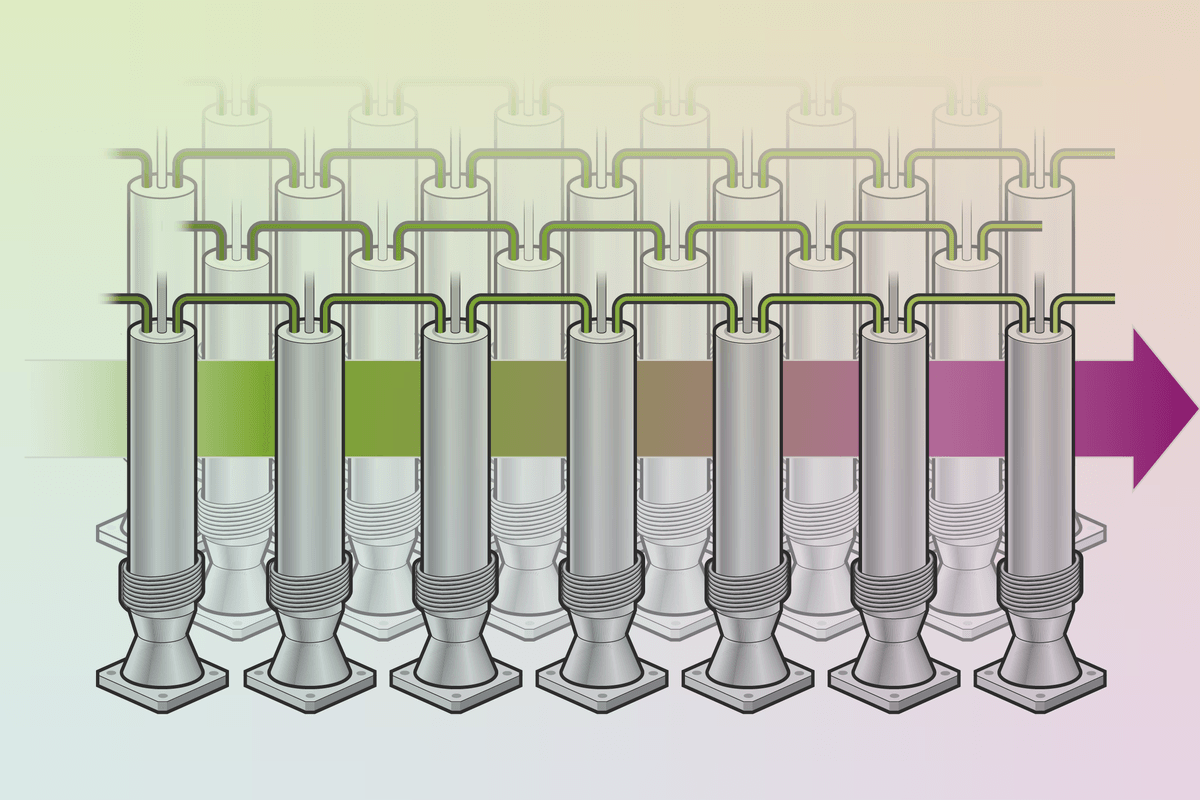
“If nuclear-fission reactors are to play a substantially enlarged role in generating electricity in the U.S., we must decide on the nature and size of new uranium-enrichment plants. The decision turns on many complex and still largely unresolved issues, such as projections of future energy consumption and the political impact of opposition to nuclear power.

Continue →

ScienceDaily: Matter & Energy

This frozen fiber makes light and sound interact 1,000x more strongly

The transformation of a liquid into a solid is familiar in nature. Lava flowing from a volcano eventually cools and hardens into rock, while water in a lake can freeze into ice during a cold winter. When materials undergo these phase changes, important physical properties can change as well, including density and refractive index, which affect how sound and light travel through them.

A related process plays an important role in manufacturing optical fibers. Glass preforms are heated until their structure becomes loose enough to be drawn into extremely thin fibers. Light travels through the fiber core, allowing information to move rapidly across long distances. This ability has made optical fibers essential to modern telecommunications.

Continue →

Scientific American

The brain doesn’t just experience reality. It edits it into a story

Offshore the fictional town of Portorosso in the Italian Riviera, a young sea monster named Luca herds goatfish on his family’s aquatic farm. In the surf above, fishers threaten to fatally spear any sea monster that comes within range. The youth’s mother sternly warns him: “We do not talk, think, discuss, contemplate or go anywhere near the surface!”

Continue →

Scientific American

How Zipline’s drone delivery system works in U.S. suburbs

With barely a whir of propeller noise, we’ve got incoming: At the top of a grassy hill, next to a simulated suburban backyard—lawn chairs, a wood play structure, the works—a smooth-cornered white box about the size of a gym bag drops out of the sky. It looks like a pre-CGI special effect because I can see the line—specifically, the one connecting the pod to a drone hovering about 260 feet up, only just visible against the overcast sky. A dinner plate–size rotor at the box’s rear spins as the box course-corrects in midair and then sets down on four small gray fins.

Continue →

Space.com

This Week In Space podcast: Episode 224 — The Science of Artemis

On Episode 224 of This Week In Space, Rod Pyle and guest co-host Rick Jenet are joined by Dr. David Kring to discuss the where, whys, and hows of the Artemis Program's lunar exploration plans.

It has been said that the Moon is a harsh mistress, and nowhere is this more apparent than at the lunar south pole. That is, however, where the Artemis program is headed, and we need to figure out how to best explore the region.

Continue →

Scientific American

How Golden Dome’s space-based missile interceptors would work

Somewhere in the world, a missile’s engines ignite, and it lifts toward the sky. Somewhere above the world, satellites sense its launch. They, in turn, send out an alert, along with information about the missile’s path. Almost instantly an interceptor in orbit—essentially a big bullet—gets its own message: fire toward the missile. Ideally the space-based weapon strikes the missile early in flight, before the rocket can release a warhead or decoys, turning a threat to the U.S. into a bunch of debris.

Continue →

Scientific American

Poem: ‘The Bachelor, Season 92 Million’

From the choice   of ten thousand candidates  how does the bee   know which is its flower? Purple coneflower shudders,    coreopsis unfurls its recursive light-licking spirals ...

Yet here, a knuckle of fuzz     drops to the edge of a sunflower’s

fleece— and moves back and forth, like the hand

of a blind man, searching

Continue →

ScienceDaily: Matter & Energy

Tiny quantum engines reveal useful energy hiding in “waste heat”

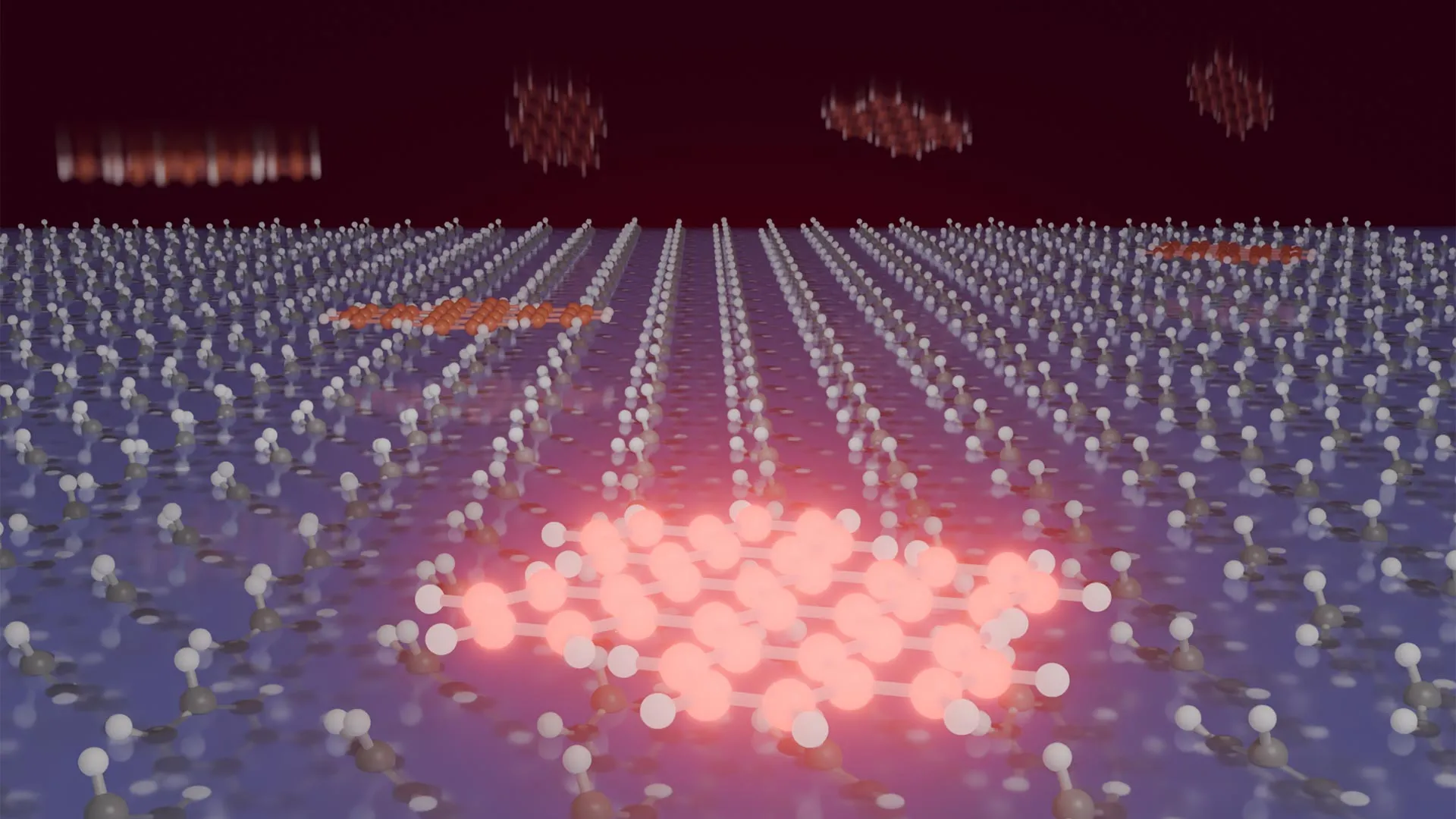
What counts as heat, and what qualifies as useful work when a machine is made from only an atom and particles of light? In emerging quantum technologies, questions like this bring together two branches of physics that were developed for very different purposes. Researchers at the University of Basel in Switzerland have now introduced a theoretical framework designed to make thermodynamics and quantum physics work consistently in the same setting.

Continue →

ScienceDaily: Earth & Climate

A lost mega-cliff may explain the Grand Canyon’s missing billion years

Scientists have uncovered evidence that an enormous ancient cliff system may have helped expose the deepest rocks of the Grand Canyon nearly a billion years before the Colorado River began carving the landscape seen today.

Led by researchers at the University of Southampton in the UK, the new study suggests that a vast "great escarpment" formed about 800 million years ago as the supercontinent Rodinia broke apart.

Continue →

Space.com

On this day in space! Aug. 22, 1963: X-15 sets world altitude record

On Aug. 22, 1963, U.S. Air Force Captain Joe Walker flew an X-15 rocket plane higher than any pilot had ever flown before.

Walker reached an altitude of over 67 miles (108 kilometers). That's about 5 miles (8 km) above the edge of space! Walker experienced about five minutes of weightlessness over the course of the 11-minute flight.

Continue →

Scientific American

How solar became the cheapest form of energy in the world

Forty-seven years ago U.S. President Jimmy Carter stood grinning in front of a set of 32 bulky solar panels. It was 1979, and the oil crisis had sent fuel costs skyrocketing. Carter, in response, was making the White House an example of conservation and alternative energy. “Solar energy will not pollute our air or water,” he said. “We will not run short of it. No one can ever embargo the sun or interrupt its delivery to us.”

Continue →

Scientific American

Readers respond to the April 2026 issue

Inspired by “The Kids Are All Right,” by Melinda Wenner Moyer, our online Discussions space asked readers, “Research has found that today’s kids and teens are doing better in many ways than previous generations. Does that ring true to your experiences?” The following response from April 8, 2026, was edited for space and clarity.

I’m a seventh grader, and I feel that people my age are better than previous generations. Lots of people at my school say that it’s not the kids bullying them; it’s the parents. There is also a lot of quiet drama—but it’s not quiet to the people it’s happening to.

Continue →

Space.com

Partial lunar eclipse live: Latest news, viewing tips and live updates from Aug. 27-28 eclipse

When most people hear the words "partial lunar eclipse," they might often assume it will be less impressive than a total eclipse, and not really worth the effort to try and see it. But the Aug. 27-28 eclipse is anything but ordinary.

At maximum eclipse, 96.2% of the moon will be immersed in Earth's umbra, the darkest part of our planet's shadow. That means only a thin sliver of the lunar surface will remain directly illuminated by the sun, while the rest of the moon will take on a deep reddish-orange hue.

Continue →

AP Science

Telescope spies the fastest star in the Milky Way zipping around a black hole

NEW YORK (AP) — A telescope has spied the fastest known star in our galaxy, racing around the supermassive black hole at the center of the Milky Way.

The star is zipping around the black hole, reaching speeds of about 15,534 miles per second (25,000 kilometers per second). That’s 100,000 times faster than a commercial plane.

“That star is really, extremely fast,” said astronomer Stefan Gillessen with the Max Planck Institute for Extraterrestrial Physics.

The newly discovered star also orbits the black hole at closer range than scientists have ever seen before, taking just 8.7 years to complete a revolution. It harnesses the black hole’s gravity to fly faster without falling in.

Continue →

Scientific American

If millions of satellites launch to space, is chaos the inevitable outcome?

Seven years ago, when Samantha Lawler moved to rural Saskatchewan to run a farm with her partner, the glorious darkness overhead was one of the biggest perks. Undiminished by light pollution, countless stars filled the night sky. It was a pristine celestial view that city dwellers can only dream of seeing. That matters a lot to Lawler, who studies the universe as an astronomer at the nearby University of Regina when she’s not tending goats and chickens.

Continue →

Space.com

I sailed to Greenland for a total solar eclipse — what I saw left me speechless

I woke up on the morning of Aug. 12 and looked out of the window to something I hadn't dared hope for: blue sky.

After days of scrutinizing weather models that seemed determined to test the nerves of everyone aboard the HX Expeditions ship MS Spitsbergen, somehow, against the odds, the clouds had cleared. Even then, I didn't trust it (especially after my 2024 eclipse experience). We had traveled thousands of miles, crossed the Greenland Sea and ventured deep into Scoresby Sund to put ourselves in the path of the moon's shadow. Now there was nothing to do but wait — and hope the sky stayed clear.

Continue →

Scientific American

SciAm is on the move

As this issue heads to print and our meticulous editors read through the final page proofs to ensure accuracy, we at Scientific American are packing up our office next to Battery Park in New York City’s Financial District. Both literally and metaphorically, we are on the move. After being sold by Springer Nature to LabX Media Group in June, the publication will have a new headquarters. More important, the sale has opened a new chapter in the history of this nearly 181-year-old institution.

Continue →

Technology

TechCrunch

Two years after launch, Walmart’s Flipkart is closing in on India’s quick-commerce leaders

Indian startups spent years getting consumers accustomed to having groceries and everyday goods delivered within minutes. Now Walmart-owned Flipkart is rapidly closing the gap with those quick-commerce pioneers, as global rival Amazon mounts its own push into instant delivery.

Flipkart Minutes, which debuted in August 2024 as the e-commerce giant’s foray into quick commerce, is now delivering 1.1 million to 1.2 million orders a day, up from about 390,000 to 400,000 in November, people familiar with the matter told TechCrunch. That puts the two-year-old service close to Swiggy’s Instamart, which is delivering about 1.4 million orders a day, according to a person familiar with its operations.

Continue reading →

TechCrunch

Harvard’s $699 startup bootcamp offers AI avatars of its instructors

As Harvard Business School seeks to expand its reach, it’s leaning on AI avatars to provide individual feedback.

These avatars were created by a startup called HeyGen and are included in the eight-week, $699 HBS Foundry bootcamp for entrepreneurs. The program offers live sessions with instructors every week, but the AI avatars are the ones providing feedback during practice pitches and board meetings.

Continue →

TechCrunch

Inherent, founded by DeepMind alumni, says its AI ‘teammate’ just outperformed Anthropic and OpenAI at replicating research

Inherent, a London AI lab founded by Google DeepMind alumni, says its AI agent just outperformed much larger models from Anthropic and OpenAI using a fraction of the size.

Of all the startups launched by Google DeepMind alumni, Inherent has gotten relatively little attention. But while better-funded rivals have yet to show the world anything concrete, the London-based team is starting to share what it’s been building.

Continue →

BBC Technology

Robot horse and rider steal the spotlight at Chinese conference

This video can not be played

Robot horse and rider steal the spotlight at Chinese conference. Video, 00:00:38Robot horse and rider steal the spotlight at Chinese conference

Up Next. Watch robot athletes compete in world's first humanoid games. Video, 00:01:42Watch robot athletes compete in world's first humanoid games

Watch: Humanoid robots stumble through football match in China. Video, 00:01:09Watch: Humanoid robots stumble through football match in China

Continue →

TechCrunch

OpenAI says California should strengthen its AI safety bill

OpenAI is calling for California to add more safeguards to a landmark AI safety bill that was passed last year.

In a LinkedIn post from the company’s global affairs team, OpenAI said California’s SB 53 “should be amended to expand safeguards,” for example by “requiring monitoring of frontier models under training or evaluation for potential serious incidents,” and by “strengthening cybersecurity protections throughout the model-development lifecycle.”

Continue →

TechCrunch

Frontier AI labs still won’t say how they’d contain a rogue model

Few of the top AI labs have published or demonstrated containment response plans, according to a recent study. A containment plan spells out what happens once an AI is caught trying to subvert human control — what access gets cut, and when the system gets shut down entirely.

Continue →

Ars Technica

Putting mice into hibernation causes a major loss of synapses

Hibernation cuts down on synapses, but mice seem to retain memories anyway.

Our leading hypothesis for how our memories are stored is that when you learn something, the connections among neurons involved get stronger and physically larger, and that constitutes the memory. The trouble is that these connections significantly change over time—they’re plastic.

Continue →

TechCrunch

US battery startups have found a lifeline in defense

U.S. battery startups hit a rough patch when the One Big Beautiful Bill eliminated battery and EV incentives, undercutting a chunk of future demand. But recently, they’ve found a lifeline in the defense world, helping to power everything from drones and torpedoes to infantry radios and fighter jets.

The Trump administration, despite its open disdain for EVs, acknowledges that batteries are an inescapable part of modern life. And like many things in Washington these days, it’s leaning on national security as justification for its recent decisions.

Continue →

TechCrunch

Pixel 11 Pro XL review: Snappier cameras can’t hide an iterative upgrade

If you buy the new Pixel 11 Pro, you might have to proactively tell people that you bought the latest phone, unless they are following each and every launch. The main reason is that the Pixel 11 doesn’t look that different from prior models. The main updates to its aesthetics are its new colors, which are admittedly gorgeous, and the addition of a small glowing light on the back of the phone, which has limited use.

Continue →

TechCrunch

Why is the DOJ investigating Andreessen Horowitz’s board seats?

Andreessen Horowitz has two partners sitting on the boards of companies that now compete with each other: Ben Horowitz at Databricks and Martin Casado at Fivetran. Nothing too scandalous on the surface, except the Department of Justice has reportedly been investigating the arrangement for almost a year, dusting off a 112-year-old antitrust law that’s rarely used against VCs.

Continue →

Wired Security

Your Expired Visa Card Could Be ‘Zombified’ to Make Contactless Payments

As the controversial vehicle surveillance giant Flock Safety continues to expand, WIRED got the code for the company’s new AI policing tool and reconstructed the software to show that its capabilities go far beyond reading license plates and tracking vehicles. We also published the story this week of a Rhode Island police officer who was subjected to five internal affairs investigations in less than two years after he publicly questioned his department’s use of Flock cameras.

Continue →

TechCrunch

Oura faces lawsuit accusing it of misleading consumers about sleep-tracking accuracy

A proposed class action lawsuit is accusing smart ring maker Oura of deceiving consumers about the accuracy of its sleep tracking features.

The lawsuit, filed on Thursday by Clarkson Law Firm in San Francisco, alleges that Oura rings are unable to measure any of the physiological signals needed to assess sleep quality or determine sleep stages, and that they instead rely on AI-generated estimates that have “a coin flip’s chance of being correct,” according to the complaint.

Continue →

TechCrunch

Walmart to finally start accepting Apple Pay and Google Pay

Apparently, hell has frozen over. Walmart on Friday said it will finally accept payments via both Apple Pay and Google Pay at its stores, including Walmart and Sam’s Club.

The retail giant says that beginning August 24, it will begin adding Tap to Pay to its payment options at select Walmart stores and Sam’s Club locations. It expects the feature to reach all stores and clubs by the end of the year, and will then roll it out to all its fuel stations by the middle of 2027.

Continue →